

Leadership · Pattern Recognition · The Systems We Build and Inhabit
I sat in the balcony of the Vermont Statehouse yesterday as an ungated observer.
No press credential. No assignment. No editorial filter between what I saw and what I could say about it.
The poem came first.
A member from Manchester read Amanda Gorman’s Earthrise as the morning devotional — about seeing our planet from space, about choosing hope, about an environmental movement rising like a new dawn. The chamber listened. Then it got to work.
What followed had nothing to do with the environment and everything to do with it.
I was there because I have been tracking this story for two months and I needed to feel it — not report it, not analyze it, but be inside it long enough to understand what it actually costs the people living it.
I came with more than one way of seeing — as someone who has stewarded land, who has sat inside systems, and who understands in her body what it means to be the person the official inventory doesn’t bother to count.
Rep. Mark Higley of Lowell rose and made his motion. He asked the House to relieve the Committee on Environment of House Bill 70 — a bill that has waited on the wall since January 2025, heard once, never voted on — and bring it to the floor for a vote pursuant to House Rule 51.
H.70 is a simple question dressed up in legislative language: should the 2.5 million acres of Vermont working farms and forests enrolled in the Use Value Appraisal program count toward the state’s conservation goals — specifically the path from 30% to 50% by 2050?
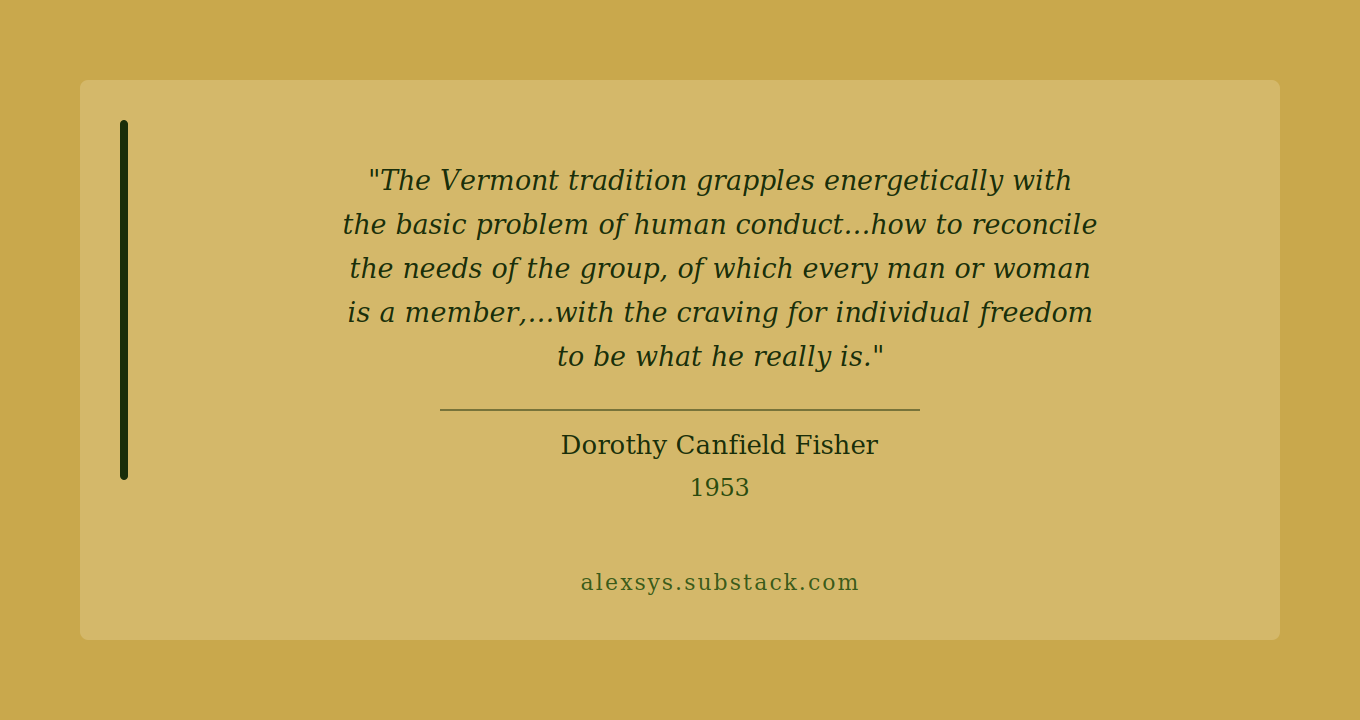
Vermont has committed to conserving 30% of its land by 2030 and 50% by 2050. Millions of acres of working Vermont land — managed daily, ecologically intact, enrolled in the state's own conservation program — are not counted toward the state's conservation goals. H.70 proposed to count them — as exactly what they are — a long-term land protection mechanism already doing conservation work.
The committee never voted on it. After 18 months on the wall, Higley invoked Rule 51 — a procedural mechanism that exists specifically to give the minority a path forward when a committee won’t move a bill.
The math was clear before the vote was called. He brought it anyway.
What happened next was not about H.70.
I have spent eighteen years in leadership rooms watching institutions respond to pressure. The particular pressure of a system being asked to examine itself. And what I witnessed from that balcony was one of the most precise demonstrations I have ever seen of what I call the Architecture of Certainty — the moment when a system stops asking whether it is solving the right problem and starts defending the mechanism it built to solve it.
The process became the sacred cow.
The room was flat when I arrived. Members at their desks, laptops open, half-attending. The procedural motion had been made. The outcome was already known by everyone present.
Then Alice Emmons rose.
Forty years in this building, and her voice caught. I felt it in my chest before I understood it in my mind — that particular weight of someone watching something they gave their life to feel suddenly fragile. It was heavy and palpable. The woman beside her put her hand to her mouth.
In that moment I understood what this day was actually about. Not H.70. Not Rule 51. Not the 2.5 million acres of working farmland waiting to be counted.
The sacred cow had entered the room. And its name was process.
“If we continue to do this — pulling bills out of committee — and this becomes the accepted practice and the norm, we will have destroyed this valuable general assembly here in Vermont.”
She meant it. Every word. Forty years of work, relationships, and institutional identity speaking at once. This was not performance. This was someone watching something she had helped build feel suddenly, dangerously unstable.
That is what fear looks like in an institution. I have seen it enough times to recognize the shape of it.
Others followed. The process is deliberate. The process is transparent. The process exists for a reason. The committee system is sacred. We do not pull bills from committees. This is not how we legislate policy.
Rep. R. Scott Campbell of St. Johnsbury, eight years in the chamber, offered what may have been the most telling statement of the morning:
“We live in a time of disregard for norms at the federal level, which is shocking to me and I think to many people.”
He connected a procedural motion about working farmland to the collapse of federal democratic norms. That is not a small leap. That is what fear looks like in an institution — the kind that reaches for the largest available frame when the immediate argument feels insufficient.
Rep. Thomas Stevens of Waterbury was the most direct. He voted no, he said, “to support legislative process rather than parliamentary anarchy.”
Parliamentary anarchy.
I sat with that phrase for a moment in the balcony. A motion invoked fewer than five times in forty years, using a rule that exists specifically to protect minority voices, brought by an independent co-sponsor who had watched a bill sit unvoted on for eighteen months — and the word chosen to describe it was anarchy.
I have sat with people like Rep. Stevens in leadership rooms. People who understand the power of words, who have spent careers using language with precision and purpose. When someone like that reaches for a word like anarchy, it is worth pausing to ask what the word is carrying that the argument alone cannot.
I cannot answer that question. I only know what I observed from the balcony.
The motion failed 80 to 58.
But something else was happening on that floor.
While the majority defended the institution, a handful of voices kept returning to the question underneath the procedure. And no matter how many times they were called out of order, redirected, or ruled not germane — the argument kept coming back.
Rep. Jed Lipsky of Stowe, an independent and co-sponsor of H.70, tried three times to make his case. Three times he was interrupted on points of order. Three times the Speaker reminded him to stay focused on process and not the underlying bill.
He stayed. He adjusted. And in the end he said this:
“I believe that when we make policy, we should consult and listen to those who will be most impacted by our policies. This process failed to happen.”
He was ruled in order. He voted yes.
Rep. Greg Burtt of Cabot made the argument nobody answered:
“Two legislative days ago, we voted unanimously to undo the process on that particular bill. We verified unanimously that the process didn’t work and we did it because we listened to Vermonters.”
He was referring to the unanimous repeal of Act 181 — the land use law that had triggered a statewide uprising from rural landowners. Two days earlier, every member of that chamber had agreed the process failed. Now, forty-eight hours later, process was sacred again.
No one answered that.
The silence after that argument was its own kind of data.
Rep. Gina Galfetti of Barre Town, who had made the same motion earlier in the session and watched it fail, was careful with her words.
She praised the committee process. She praised her chair. She acknowledged the institutional argument. And then she said:
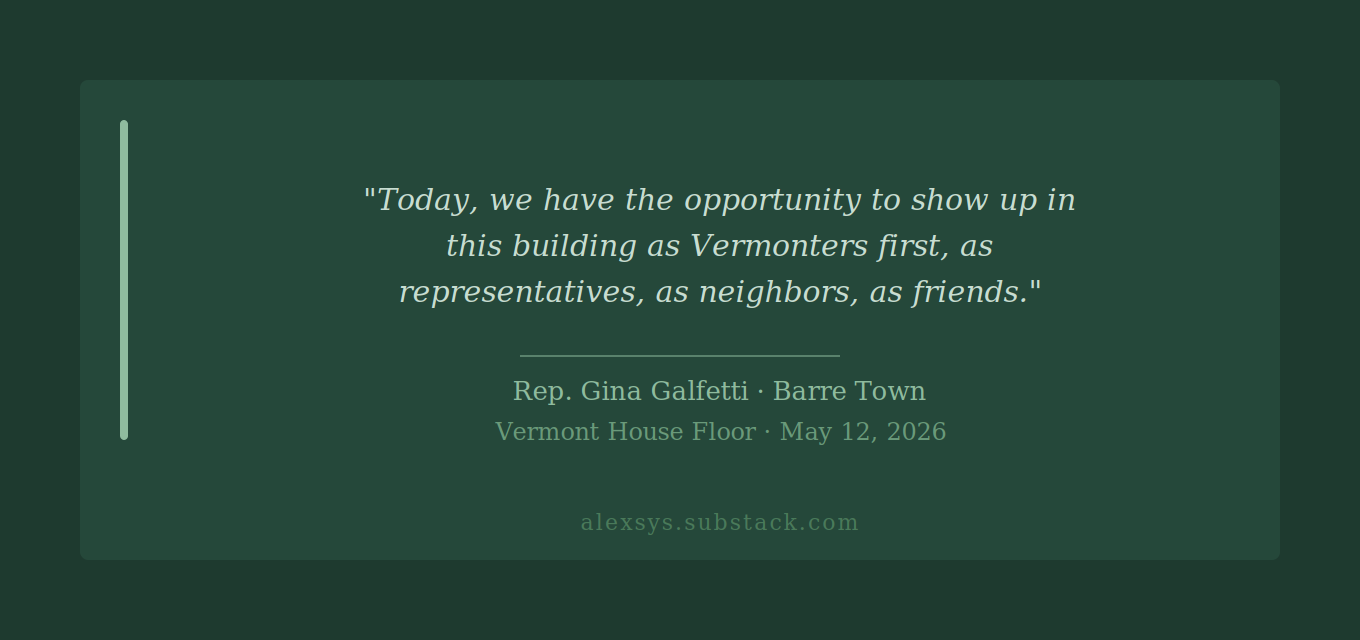
She was trying to hold two things at once — respect for the institution and recognition that the institution had not served everyone equally in this case.
In my work on fear-based systems, I’ve written that courage is not the absence of fear — it is speaking with the fear present. Not as a heroic individual act but as a practiced decision to say the true thing in the room where the true thing is unwelcome. (See: Fear Is the Fuel)
Galfetti did that. She remained inside the system while refusing to pretend it was working perfectly. She didn’t blow it up. She didn’t comply silently. She threaded the needle with full awareness of what it would cost her in that room.
It didn’t change the outcome. It mattered anyway.
I want to tell you what it looked like from the balcony.
A small toy car — blue, plastic — sat on someone’s desk in the back row. I do not know why it was there. I only know it stayed there through the whole proceeding and somehow felt exactly right.
Three times the committee was called to the front of the chamber. Three times the floor broke down enough that the institution had to stop and reassert itself publicly. The third time I watched the cluster of people gathered around the dais — both sides in it now, someone taking notes in the middle, the conversations urgent and low — and thought: this is what a system looks like when it hits a wall it wasn’t built to absorb.
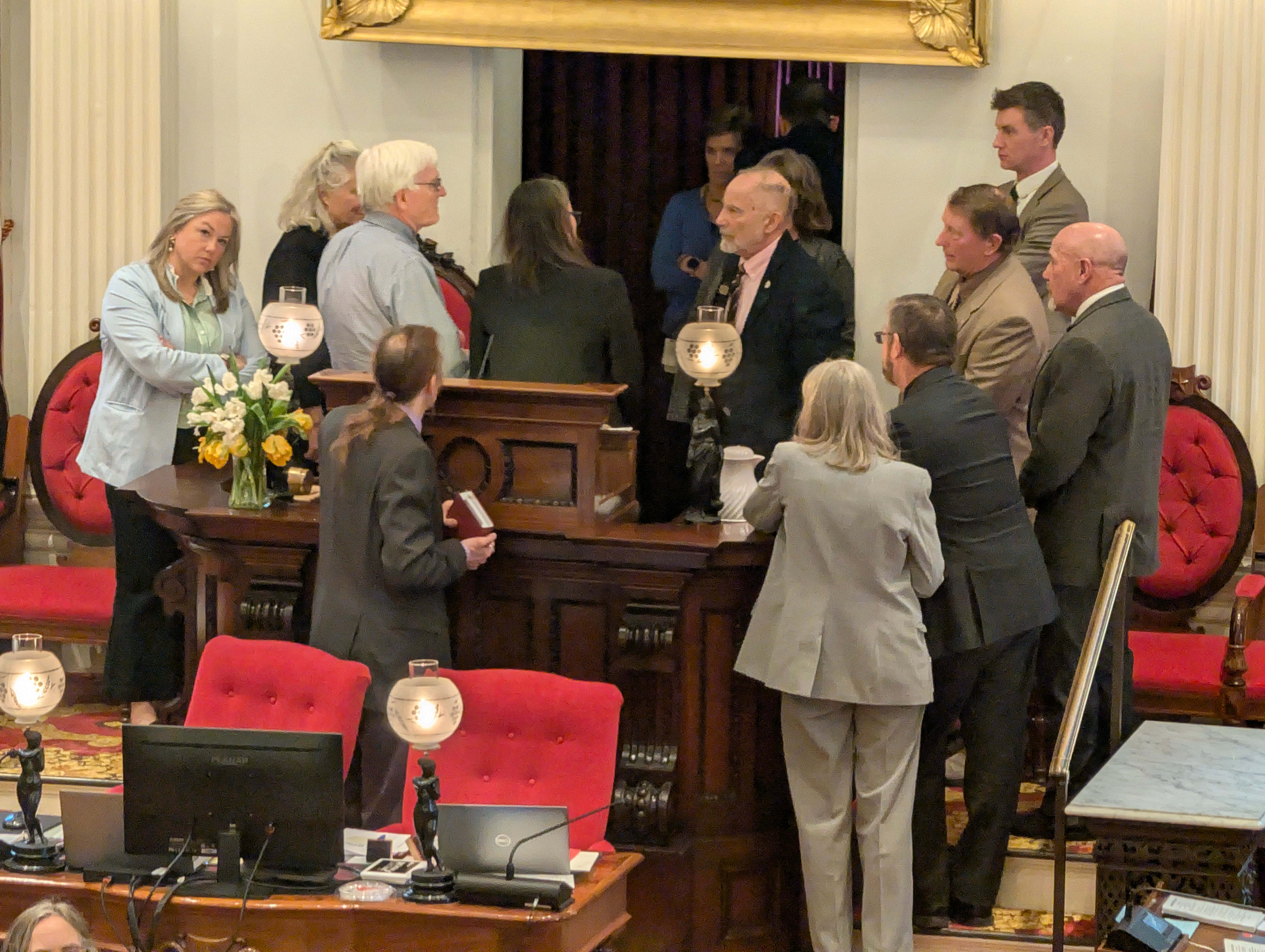
A woman in the gallery covered her face with both hands. Not dramatically. Just quietly, privately, done.
Rep. Jed Lipsky was cut off at the microphone. He sat down. He came back. He adjusted his argument to stay within the rules. He finished his point. He voted yes knowing he would lose.
When the final vote was called — 80 no, 58 yes — the people who had voted yes stood and spoke anyway. Not for the count. For the record. Farming is conservation. Don’t forget where you’re from. We listened to Vermonters.
I know something about work that registers in the individual and not yet in the aggregate. So do the people this bill was about.
I watched the woman at the center of it all after the vote. She was at her desk, hand to her mouth, pages of notes in front of her. She is not the villain of this story. She is the avatar of a system doing exactly what it was built to do — and living with what that costs.
I have sat across from leaders in that seat more times than I can count. The chair of the committee. The head of the division. The executive who holds the line because the line is all they know how to hold. They are not bad people. They are often the most committed people in the room — which is precisely why the system chose them and precisely why it costs them so much to carry it.
Sitting in that balcony yesterday, I had one thought about the woman at the center of it all.
I wanted to go down there and tell her there is a better way.
Not because the process doesn’t matter. It does. Not because institutions don’t need defending. They do. But because a system that was never designed to hear the people it was built to serve doesn’t need to silence them. It just needs to keep running.
And Vermont has always claimed to be something different than that.
I walked out of the Statehouse slowly.
The quotes on the walls stopped me.
“Born of a resistance to arbitrary power.” Vermont Senate Report, 1855
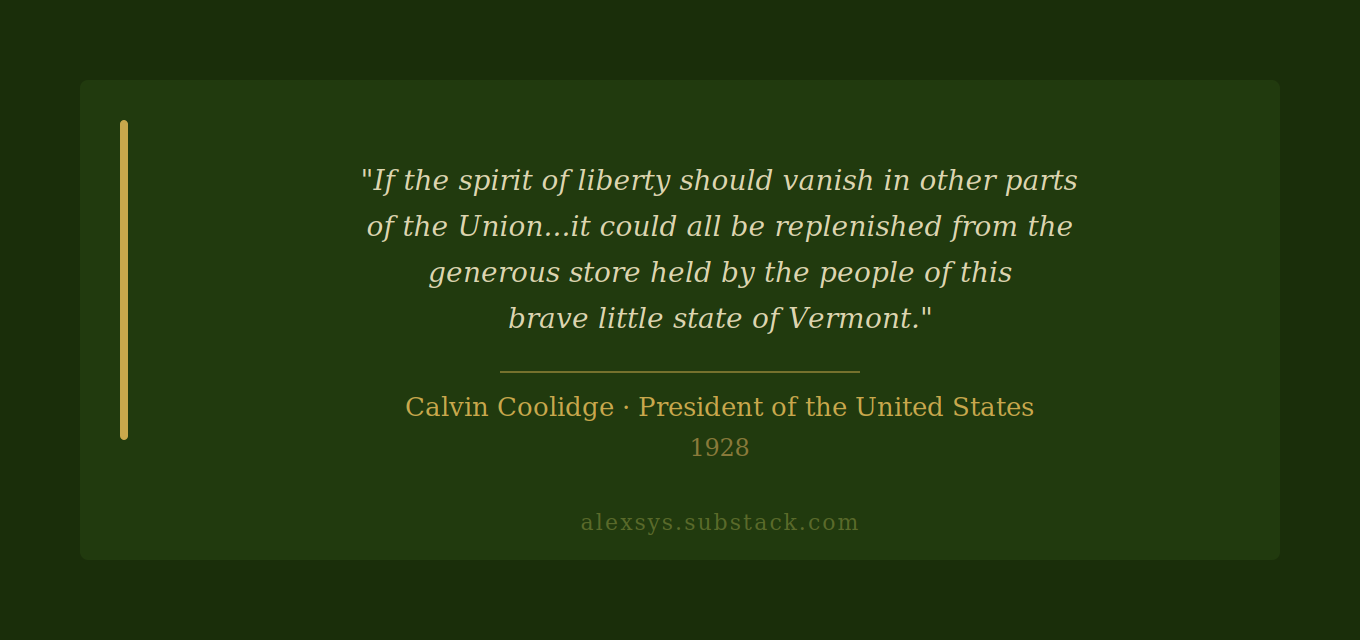
“Vermonters for 200 years have handed down certain attitudes of mind from generation to generation. Some folks call us old-fashioned and backward-looking for adhering to the ideals and principles characteristic of the people who settled our State. We value our heritage of ideals.” George Aiken, Governor, 1938
They called to me on the way out. Not as decoration. As witnesses. Written by people who understood that the spirit this state was founded on is not procedural. It is not institutional. It lives in the people doing the work — on the land, in the room, in the balcony — whether the official inventory counts them or not.
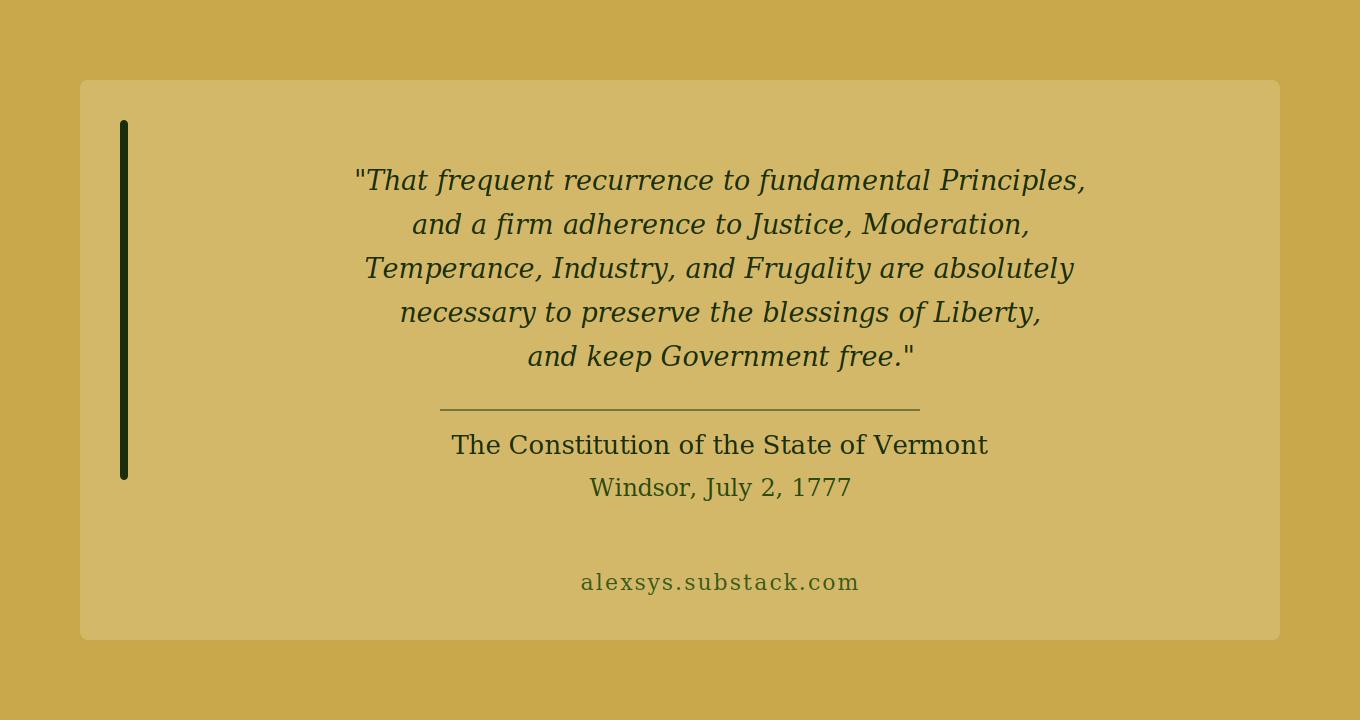
The quotes on the walls of the Statehouse have been there a long time.
They were written by people who understood that process is not the point. Process is the vehicle. The point is what the vehicle is supposed to carry — the voices of the people most affected by the decisions being made inside those walls.
Yesterday, the vehicle protected itself.
The people it was built to carry are still waiting outside.
Support this work at ko-fi.com/alexsysthompson
Alexsys Thompson is a consciousness-based leadership coach and investigative journalist. She writes about leadership, pattern recognition, and the systems we build and inhabit at alexsys.substack.com.
For the data behind H.70 — what Vermont’s conservation numbers actually show, and how it compares to the nine other states with 30x30 goals — watch for the forthcoming under the Vermont Investigative path of the yellow brick road.
holy cow again!! WOW. This is amazing. I'm blown away. BRAVO!!!
Our culture and government have been hijacked by over-educated folks with no practical experience but for support of their self interests. They belong to post-graduate job programs called Government or "non-profit organization" lobbies (that funnel their government grants back into committees to elect). What a shell game our system has become. Your posts have shown me that (politically agnostic) common sense and righteous indignation have morphed into belief there will be governance "for the common good". Thank you Alexsys...